
Camera Sensor Sizes Explained (Complete Beginner’s Guide 2026)
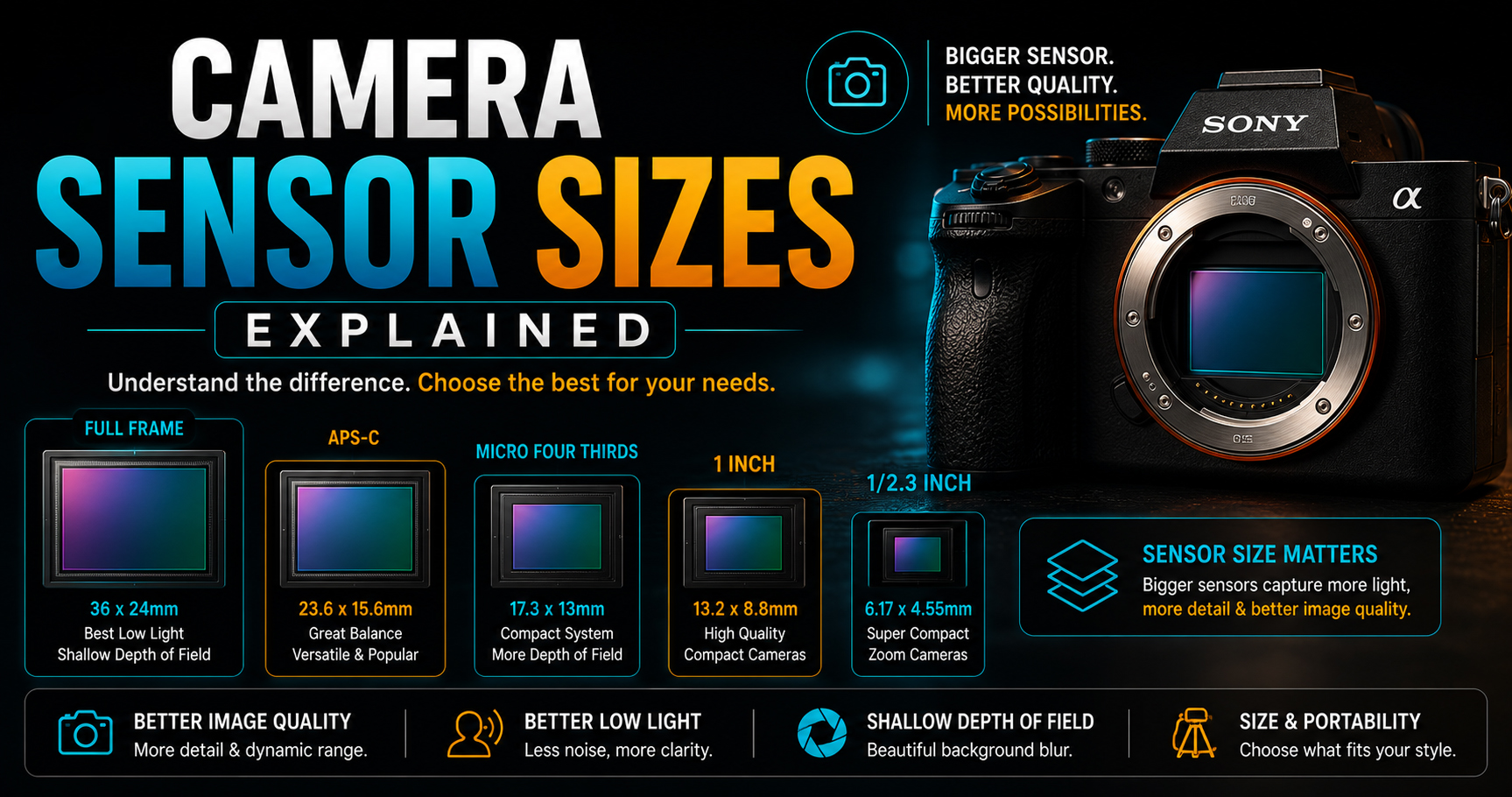
If you’re planning to buy a DSLR or mirrorless camera, you’ve probably come across terms like Full Frame, APS-C, Crop Sensor, Micro Four Thirds, or Medium Format.
These terms refer to the camera sensor size, one of the most important factors affecting image quality, low-light performance, background blur, and the overall look of your photographs and videos.
Many beginners think more megapixels always mean better images. In reality, sensor size often has a bigger impact on image quality than megapixel count.
In this guide, you’ll learn:
- What a camera sensor is
- Why sensor size matters
- Different camera sensor sizes
- APS-C vs Full Frame comparison
- Which sensor is best for beginners
- Which sensor professionals use
- Common myths about camera sensors
Let’s simplify everything step by step.
What is a Camera Sensor?
A camera sensor is the electronic component inside your camera that captures light and converts it into a digital image.
Think of the sensor as the digital version of camera film.
When light enters through the lens, it reaches the sensor. The sensor records that light and creates the photograph you see.
The larger the sensor, the more light it can generally capture, which often leads to better image quality—especially in challenging lighting conditions.
Why Does Sensor Size Matter?
Sensor size influences several important aspects of photography:
- Image quality
- Low-light performance
- Dynamic range
- Background blur (Depth of Field)
- Noise levels
- Lens field of view
- Overall camera size and weight
Choosing the right sensor size depends on your budget, photography style, and business goals.
Types of Camera Sensor Sizes
The four most common sensor sizes are:
| Sensor Type | Common Use |
|---|---|
| Micro Four Thirds | Travel, Video, Wildlife |
| APS-C (Crop Sensor) | Beginners, Students, Content Creators |
| Full Frame | Weddings, Portraits, Commercial Photography |
| Medium Format | Fashion, Advertising, Fine Art |
Each sensor size has its strengths and is suitable for different types of photography.
1. APS-C Sensor (Crop Sensor)
An APS-C sensor is smaller than a Full Frame sensor but significantly larger than a smartphone sensor.
Best For
- Beginners
- Students
- Travel Photography
- Wildlife Photography
- Street Photography
- YouTube Content
- Photography Courses
Advantages
- More affordable cameras and lenses.
- Lightweight equipment.
- Excellent image quality.
- Extra reach for wildlife due to the crop factor.
- Great value for photographers starting their careers.
Limitations
- Slightly lower low-light performance than Full Frame.
- Less background blur compared to larger sensors.
APS-C cameras are an excellent balance between performance, portability, and cost.
2. Full Frame Sensor
A Full Frame sensor is approximately the same size as traditional 35mm film.
It is the preferred choice for many professional photographers.
Best For
- Wedding Photography
- Portrait Photography
- Fashion Photography
- Commercial Photography
- Cinematography
- Event Photography
Advantages
- Better low-light performance.
- Wider dynamic range.
- More natural background blur.
- Excellent image quality.
- Greater creative flexibility.
Limitations
- Higher camera and lens prices.
- Larger and heavier equipment.
For professionals, Full Frame is often a long-term investment.
3. Micro Four Thirds Sensor
Micro Four Thirds (MFT) cameras are known for being compact and lightweight.
Best For
- Travel Photography
- Wildlife
- Street Photography
- Videography
- Everyday Photography
Advantages
- Small and portable.
- Affordable lenses.
- Great image stabilization.
- Excellent video features.
- Extended telephoto reach because of the 2x crop factor.
Limitations
- Less background blur compared to Full Frame.
- Slightly lower low-light performance.
Many travel photographers and filmmakers appreciate the balance between quality and portability.
4. Medium Format Sensor
Medium Format cameras feature sensors larger than Full Frame.
Best For
- Fashion Photography
- Advertising
- Product Photography
- Fine Art
- Luxury Commercial Projects
Advantages
- Exceptional image quality.
- Extremely high resolution.
- Outstanding dynamic range.
- Rich color reproduction.
Limitations
- Expensive cameras and lenses.
- Larger and heavier systems.
- Slower shooting speeds compared to many Full Frame cameras.
Most beginners do not need Medium Format equipment.
APS-C vs Full Frame
| Feature | APS-C | Full Frame |
| Price | More Affordable | More Expensive |
| Camera Size | Smaller | Larger |
| Lens Cost | Lower | Higher |
| Low-Light Performance | Very Good | Excellent |
| Background Blur | Good | Better |
| Wildlife Photography | Excellent | Excellent |
| Portrait Photography | Very Good | Outstanding |
| Wedding Photography | Good | Excellent |
| Travel Photography | Excellent | Very Good |
Neither sensor is universally “better.” The right choice depends on your budget and the type of photography you enjoy.
Crop Factor Explained
A crop sensor changes the field of view of your lens.
For example:
- 50mm lens on Full Frame = 50mm view
- 50mm lens on Canon APS-C ≈ 80mm equivalent
- 50mm lens on Nikon/Sony APS-C ≈ 75mm equivalent
- 50mm lens on Micro Four Thirds ≈ 100mm equivalent
This is why wildlife photographers often appreciate crop-sensor cameras—they provide extra reach without needing longer lenses.
Does a Bigger Sensor Always Mean Better Photos?
Not necessarily.
A skilled photographer with an APS-C camera can produce stunning professional images, while an inexperienced photographer with an expensive Full Frame camera may still struggle.
Photography is about:
- Understanding light
- Composition
- Camera settings
- Timing
- Storytelling
- Editing
Your knowledge matters more than the size of your sensor.
Learn Photography Before Upgrading Your Camera
Many beginners believe buying a Full Frame camera will instantly improve their photography. In reality, mastering the fundamentals has a much greater impact than upgrading equipment.
At Sharanya Institute Of Photography, under the expert guidance of Shrinivas Javanjal, students learn practical photography through outdoor shoots, studio sessions, wedding assignments, cinematography projects, and editing classes.
Our Online and Offline Diploma in Photography & Wedding Cinematography Courses are designed to help students understand camera settings, lighting, composition, lens selection, editing, and professional workflows. By building strong technical skills first, you’ll know when—and if—you truly need to upgrade to a larger sensor camera.
Which Sensor Should You Buy?
If You’re a Beginner
Choose:
- APS-C
It offers excellent quality, affordable lenses, and plenty of room to grow.
If You’re a Wedding Photographer
Choose:
- Full Frame
Its low-light performance and dynamic range make it well-suited for challenging lighting conditions.
If You Love Wildlife
Choose:
- APS-C or Micro Four Thirds
The crop factor effectively increases your lens reach.
If You’re a Travel Photographer
Choose:
- APS-C or Micro Four Thirds
Both systems provide excellent image quality in compact, lightweight bodies.
If You’re a Commercial Photographer
Choose:
- Full Frame or Medium Format
These systems offer exceptional image quality for high-end professional work.
Common Camera Sensor Myths
Myth 1: More Megapixels Mean Better Photos
Reality: Sensor size, lens quality, lighting, and technique often matter more than megapixels.
Myth 2: Beginners Need Full Frame
Reality: Most beginners will learn faster and spend less with an APS-C camera.
Myth 3: Crop Sensors Are Not Professional
Reality: Many professional photographers successfully use APS-C cameras, especially for wildlife, sports, and travel photography.
Frequently Asked Questions (FAQs)
Which sensor is best for beginners?
APS-C is an excellent choice because it combines affordability, portability, and high image quality.
Is Full Frame worth the extra money?
For many professionals, yes—especially for weddings, portraits, and commercial work. Beginners should focus on learning before upgrading.
Does sensor size affect background blur?
Yes. Larger sensors generally make it easier to achieve shallow Depth of Field and stronger background blur with equivalent framing and settings.
Is APS-C good enough for professional photography?
Absolutely. APS-C cameras are widely used for wildlife, sports, travel, and many commercial projects.
Should I choose Full Frame or APS-C?
If you’re starting your photography journey, APS-C offers excellent value. If your work demands the benefits of a larger sensor and your budget allows, Full Frame is a strong long-term investment.
Final Thoughts
Understanding camera sensor sizes helps you make smarter buying decisions and avoid spending money on features you may not need. Whether you choose APS-C, Full Frame, Micro Four Thirds, or Medium Format, remember that great photography depends more on your skills than your equipment.
Invest in learning first, practice consistently, and upgrade your gear only when your creative or professional needs require it.
If your goal is to become a professional photographer, cinematographer, or editor, Sharanya Institute Of Photography offers Online and Offline Diploma in Photography & Wedding Cinematography Courses under the mentorship of Shrinivas Javanjal. Through practical training, live projects, and industry-focused instruction, you’ll develop the confidence and expertise needed to build a successful creative career.
Tags:
You May Also Like
-
Jul 24, 2026
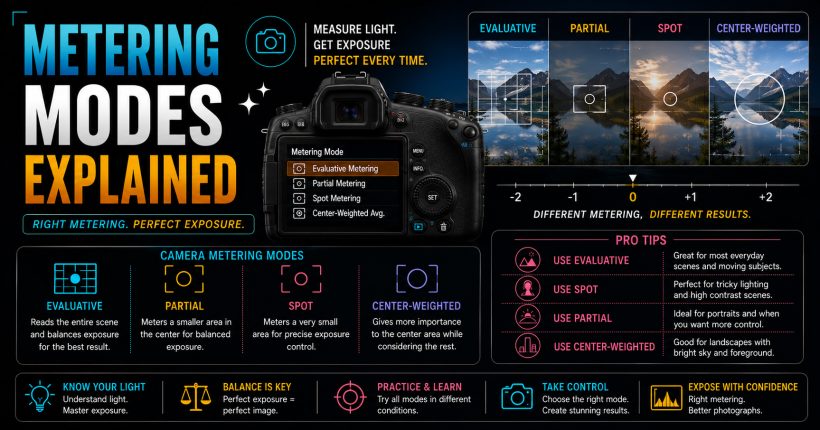
Learn camera metering modes, exposure measurement, and professional techniques to capture perfectly exposed photographs in every lighting condition with confidence.
-
Jul 24, 2026
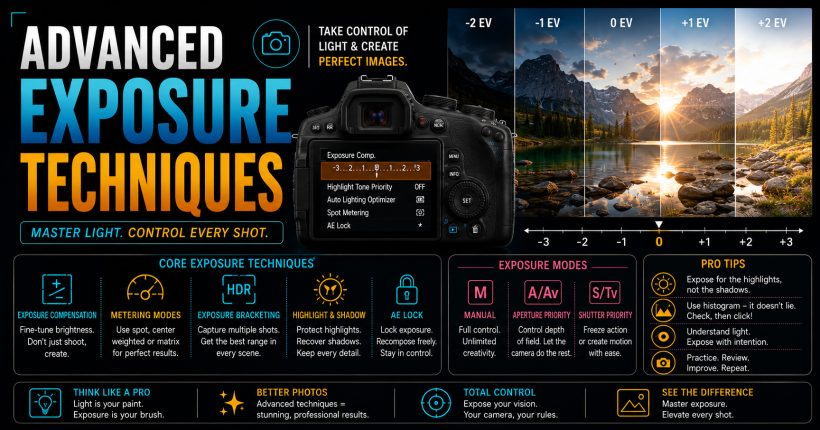
Master advanced exposure techniques using histograms, metering, exposure compensation, and bracketing to capture perfectly exposed professional-quality photographs every time.
-
Jul 24, 2026
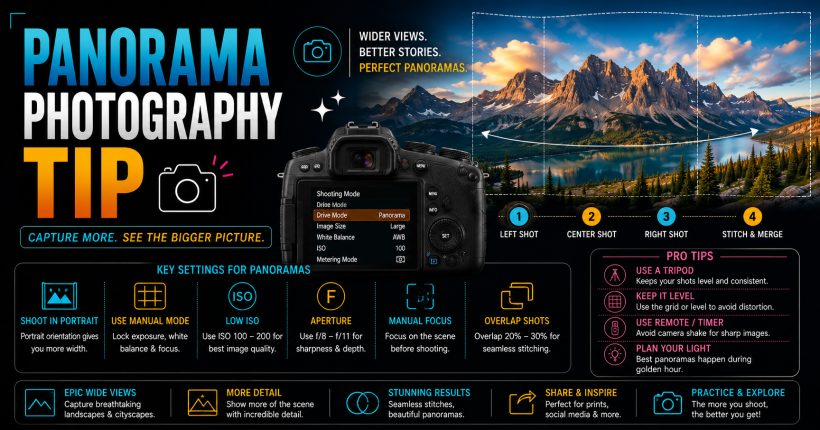
Learn panorama photography with simple camera settings, stitching techniques, and professional tips to capture breathtaking wide-angle landscapes and cityscapes effortlessly.
-
Jul 24, 2026
Learn time-lapse photography with simple camera settings, interval techniques, editing workflow, and expert tips for creating stunning cinematic videos effortlessly.
Sign up to receive our latest updates
Get in touch
Call us directly?
+91 9769533675
Address
Office No 9, First floor, Sudama Tower, Kasturi Plaza, Dombivli (E)
support@photovideocourse.com
Popular Courses

- © 2026 Sharanya Institute Of Photography All rights reserved.