
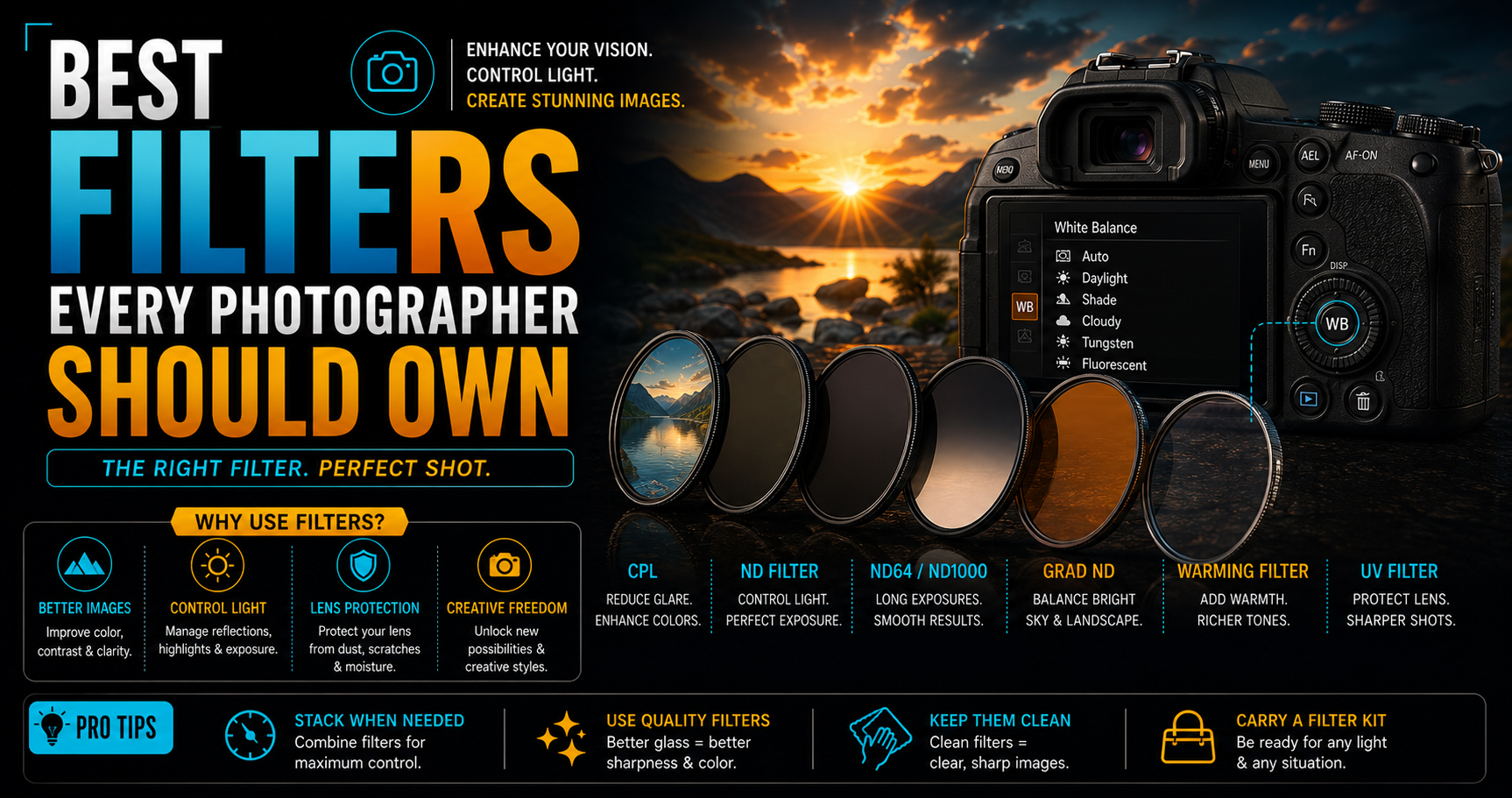
Best Camera Filters Every Photographer Should Own (Complete Guide 2026)
If you’ve recently purchased a DSLR or mirrorless camera, you’ve probably heard photographers talk about UV Filters, Polarizing Filters, and ND Filters.
Many beginners think filters are only used to protect the lens, but that’s only part of the story.
The right camera filter can improve image quality, reduce reflections, protect your expensive lens, enhance colors, and even help you create stunning long-exposure photos and cinematic videos.
In this complete guide, you’ll learn:
- What camera filters are
- Why photographers use filters
- Different types of camera filters
- Which filter is best for beginners
- How to choose the right filter
- Common mistakes to avoid
- Professional filter recommendations
Let’s get started.
What is a Camera Filter?
A camera filter is a piece of glass or optical material that attaches to the front of your camera lens.
It changes or improves the light entering the lens before it reaches the camera sensor.
Some filters protect your lens, while others help you create special photographic effects that cannot always be achieved during editing.
Why Should You Use Camera Filters?
Camera filters offer several advantages:
- Protect the front element of your lens.
- Reduce unwanted reflections.
- Improve color saturation.
- Control exposure in bright sunlight.
- Create smooth waterfalls and rivers.
- Capture long-exposure photography.
- Produce cinematic motion blur in video.
- Improve landscape photography.
For many photographers, filters are essential accessories.
Types of Camera Filters
The most commonly used filters include:
- UV Filter
- Circular Polarizing (CPL) Filter
- Neutral Density (ND) Filter
- Graduated ND Filter
- Variable ND Filter
- Mist Filter
- Color Filters (for creative effects)
Let’s explore each one.
1. UV Filter
A UV Filter was originally designed to reduce ultraviolet light, but with modern digital cameras, its primary role is lens protection.
Best For
- Everyday photography
- Travel
- Wildlife
- Street photography
- Outdoor shooting
Advantages
- Protects the lens from scratches.
- Reduces dust and fingerprints on the lens itself.
- Easier to clean than the front lens element.
- Inexpensive compared to replacing a damaged lens.
Should You Buy One?
Yes. A quality UV filter is a practical way to help protect your investment.
2. Circular Polarizing Filter (CPL)
The CPL Filter is one of the most useful filters for outdoor photography.
It helps:
- Reduce reflections from water and glass.
- Deepen blue skies.
- Increase color saturation.
- Improve cloud contrast.
- Cut glare from shiny surfaces.
Best For
- Landscape Photography
- Travel Photography
- Car Photography
- Nature Photography
A CPL filter often produces results that are difficult to replicate in editing.
3. Neutral Density (ND) Filter
An ND Filter reduces the amount of light entering the camera without changing colors.
Think of it as sunglasses for your camera.
Best For
- Waterfalls
- Rivers
- Ocean Photography
- Long Exposure Photography
- Bright daylight portraits
- Video shooting
Popular ND strengths include:
- ND8
- ND16
- ND64
- ND1000
The stronger the ND filter, the less light reaches the sensor.
4. Graduated ND Filter
A Graduated ND Filter is dark on one side and clear on the other.
It balances bright skies with darker foregrounds.
Best For
- Landscape Photography
- Sunrise Photography
- Sunset Photography
- Mountain Photography
This filter helps preserve detail in both highlights and shadows.
Learn Filters Through Practical Photography
Understanding camera filters becomes much easier when you use them in real shooting situations.
At Sharanya Institute Of Photography, under the guidance of Shrinivas Javanjal, students learn how to use UV, CPL, ND, and other professional filters during landscape shoots, long exposure photography, wedding projects, outdoor portraits, and cinematography assignments.
Our Online and Offline Diploma in Photography & Wedding Cinematography Courses provide practical training in camera settings, lighting, filters, composition, editing, and professional workflows. If you want to become a professional photographer, cinematographer, or editor, hands-on experience with real equipment is one of the fastest ways to build confidence and skills.
5. Variable ND Filter
A Variable ND Filter lets you adjust the amount of light reduction by rotating the filter.
Advantages
- One filter replaces multiple ND filters.
- Convenient for video creators.
- Ideal for changing lighting conditions.
Best For
- Videography
- Outdoor Interviews
- Cinematic Videos
- YouTube Creators
6. Mist Filter
A Mist Filter (also called a diffusion filter) softens highlights and creates a cinematic glow.
Best For
- Portrait Photography
- Wedding Photography
- Cinematic Filmmaking
- Music Videos
Mist filters are widely used by filmmakers to achieve a softer, more atmospheric look.
Which Filter Should Beginners Buy First?
If you’re just starting photography, consider this order:
- UV Filter – Lens protection.
- CPL Filter – Better landscapes and reflections.
- ND Filter – Long exposures and bright daylight.
- Variable ND Filter – If you shoot video regularly.
These filters cover most beginner and enthusiast needs.
Choosing the Correct Filter Size
Filters come in different diameters.
Common sizes include:
- 49mm
- 52mm
- 58mm
- 67mm
- 72mm
- 77mm
- 82mm
Check the Ø (diameter) marking on the front of your lens before buying.
Common Beginner Mistakes
Avoid these mistakes:
- Buying the wrong filter size.
- Choosing very cheap filters with poor optical quality.
- Leaving a dirty filter on the lens.
- Forgetting to remove the CPL filter indoors when it is not needed.
- Using an ND filter without adjusting exposure settings.
- Stacking too many filters, which can cause vignetting.
Quality filters preserve image quality and are worth the investment.
Professional Tips
- Buy multi-coated filters to reduce flare and reflections.
- Keep filters clean using a microfiber cloth.
- Store filters in protective cases.
- Practice rotating a CPL filter to see its effect.
- Use a tripod with strong ND filters for long exposures.
- Remove unnecessary filters when shooting at night to reduce unwanted reflections.
Camera Filters vs Editing Software
Many effects can be enhanced during editing, but some cannot be fully recreated.
| Filter | Can Editing Replace It? |
|---|---|
| UV Filter | No (Protection only) |
| CPL Filter | No (Real reflection reduction) |
| ND Filter | No (Long exposure requires reduced light) |
| Graduated ND | Partially |
| Mist Filter | Partially |
Using the right filter during capture often produces cleaner and more natural results.
Frequently Asked Questions (FAQs)
Which camera filter should beginners buy first?
A high-quality UV filter is a good first purchase for lens protection, followed by a CPL filter for outdoor photography.
Is a UV filter necessary?
While modern cameras don’t require UV filtration for image quality, many photographers use UV filters to protect the front element of their lenses.
What is the purpose of an ND filter?
An ND filter reduces the amount of light entering the lens, allowing slower shutter speeds and wider apertures in bright conditions.
Are CPL filters worth buying?
Yes. CPL filters effectively reduce reflections, improve color saturation, and make skies appear deeper and more vibrant.
Can I use multiple filters together?
Yes, but stacking filters can sometimes cause vignetting or reduce image quality, especially with wide-angle lenses.
Final Thoughts
Camera filters are valuable tools that help photographers improve image quality, protect expensive lenses, and create creative effects directly in-camera. Whether you’re capturing landscapes, waterfalls, portraits, or cinematic videos, choosing the right filter can make a noticeable difference.
Start with a quality UV filter for protection, add a CPL filter for outdoor photography, and invest in ND filters as your skills grow. Learning when and how to use each filter will expand your creative possibilities.
If you’re serious about becoming a professional photographer, cinematographer, or editor, Sharanya Institute Of Photography offers Online and Offline Diploma in Photography & Wedding Cinematography Courses under the expert mentorship of Shrinivas Javanjal. Through practical outdoor shoots, studio sessions, editing workshops, and equipment training, you’ll learn how to use filters and other professional tools with confidence.
OUR COURSES
Explore top courses

-
Private 1-1
-
Intermediate
₹5,000.00₹10.00
-
Dombivli
-
1 Student
-
10 lessons
Master professional photography, wedding cinematography, editing, lighting, and business skills through comprehensive hands-on offline diploma training.

-
Private 1-1
-
Intermediate
₹10,000.00
-
Dombivli
-
0 Students
-
10 lessons
Master cinematic wedding filmmaking, camera movements, lighting, audio, storytelling, and professional shooting through practical offline training.

-
Private 1-1
-
All levels
₹5,000.00
-
Dombivli
-
0 Students
-
10 lessons
-
Private 1-1
-
All levels
₹5,000.00
-
Dombivli
-
0 Students
-
10 lessons
Master digital marketing, SEO, social media, branding, advertising, and lead generation through practical offline classroom training.

-
Private 1-1
-
Beginner
₹5,000.00
-
Dombivli
-
0 Students
-
10 lessons
-
Private 1-1
-
Beginner
₹5,000.00
-
Dombivli
-
0 Students
-
10 lessons
Master branding, marketing, business management, client relations, and creative entrepreneurship through practical offline classroom training.
-
Private 1-1
-
Intermediate
₹10,000.00
-
Dombivli
-
0 Students
-
10 lessons
Master newborn safety, posing, lighting, composition, and professional editing through practical offline photography training.
OUR PACKAGE
Explore top packages

Tags:
You May Also Like
-
Jul 24, 2026
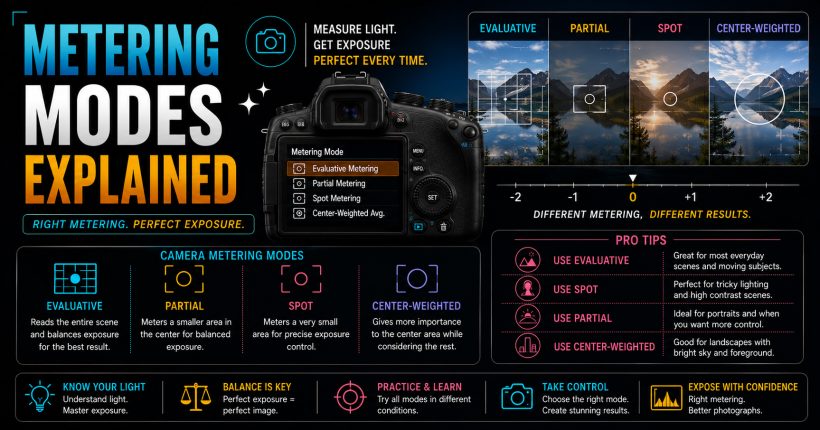
Learn camera metering modes, exposure measurement, and professional techniques to capture perfectly exposed photographs in every lighting condition with confidence.
-
Jul 24, 2026
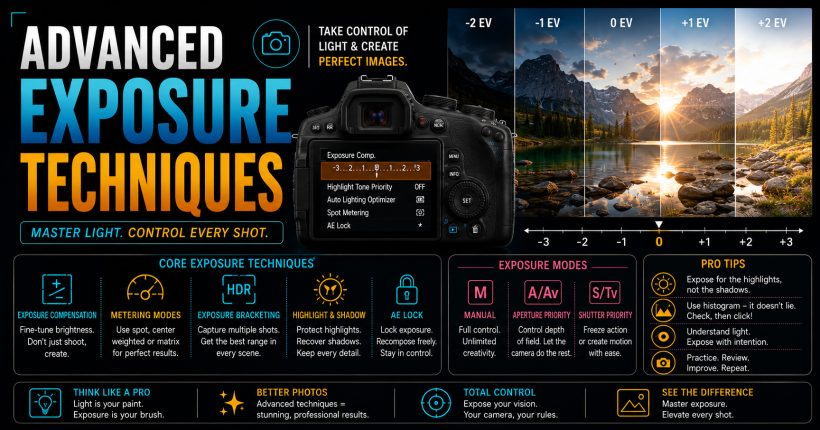
Master advanced exposure techniques using histograms, metering, exposure compensation, and bracketing to capture perfectly exposed professional-quality photographs every time.
-
Jul 24, 2026
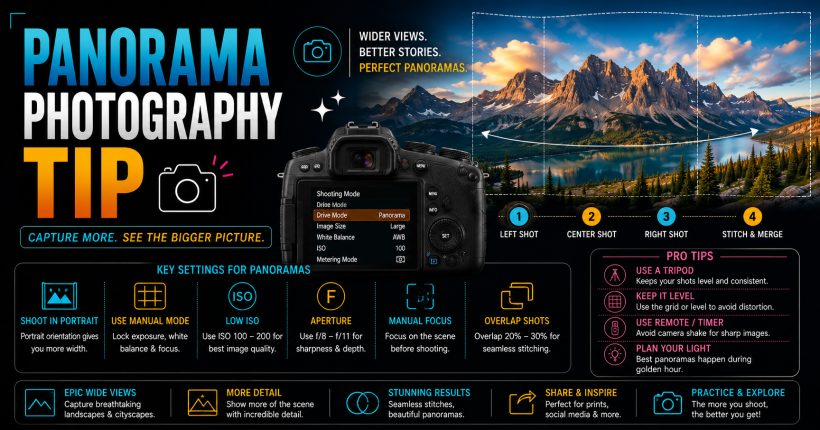
Learn panorama photography with simple camera settings, stitching techniques, and professional tips to capture breathtaking wide-angle landscapes and cityscapes effortlessly.
-
Jul 24, 2026
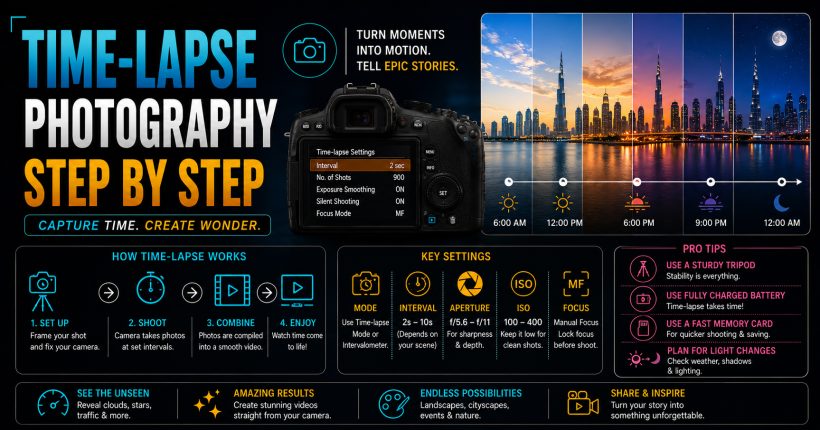
Learn time-lapse photography with simple camera settings, interval techniques, editing workflow, and expert tips for creating stunning cinematic videos effortlessly.
Sign up to receive our latest updates
Get in touch
Call us directly?
+91 9769533675
Address
Office No 9, First floor, Sudama Tower, Kasturi Plaza, Dombivli (E)
support@photovideocourse.com
Popular Courses

- © 2026 Sharanya Institute Of Photography All rights reserved.