
How to Capture Beautiful Bokeh Photos (Complete Guide 2026)
One of the most attractive effects in photography is the beautiful blurry background that makes your subject stand out. This effect is called Bokeh.
You’ve probably seen stunning portraits where the person’s face is perfectly sharp while the background melts into soft circles of light. That dreamy look isn’t created by expensive editing—it’s achieved using the right camera settings, lens choice, and shooting technique.
The good news is that you don’t need the most expensive camera to create beautiful bokeh. With the right knowledge and practice, even beginners can capture professional-looking images.
In this complete guide, you’ll learn:
- What bokeh is
- How the bokeh effect works
- Best camera settings for bokeh
- Best lenses for bokeh photography
- Common mistakes to avoid
- Professional tips for creating creamy background blur
Let’s begin.
What is Bokeh?
Bokeh (pronounced boh-kay) comes from the Japanese word “boke,” meaning blur or haze.
In photography, bokeh refers to the quality of the out-of-focus areas in an image—not simply the amount of blur.
Good bokeh appears:
- Smooth
- Soft
- Creamy
- Natural
- Pleasing to the eye
Professional portrait photographers often use bokeh to isolate the subject and remove distracting backgrounds.
Why is Bokeh Important?
Bokeh helps:
- Draw attention to the subject.
- Create professional-looking portraits.
- Separate the subject from the background.
- Add depth to the image.
- Produce a cinematic look.
- Make photos more visually appealing.
A well-executed bokeh effect enhances the overall impact of a photograph.
What Creates Bokeh?
Several factors work together to create beautiful background blur.
The most important are:
- Wide aperture
- Longer focal length
- Distance between subject and background
- Distance between camera and subject
- Lens design
- Sensor size
Let’s look at each one.
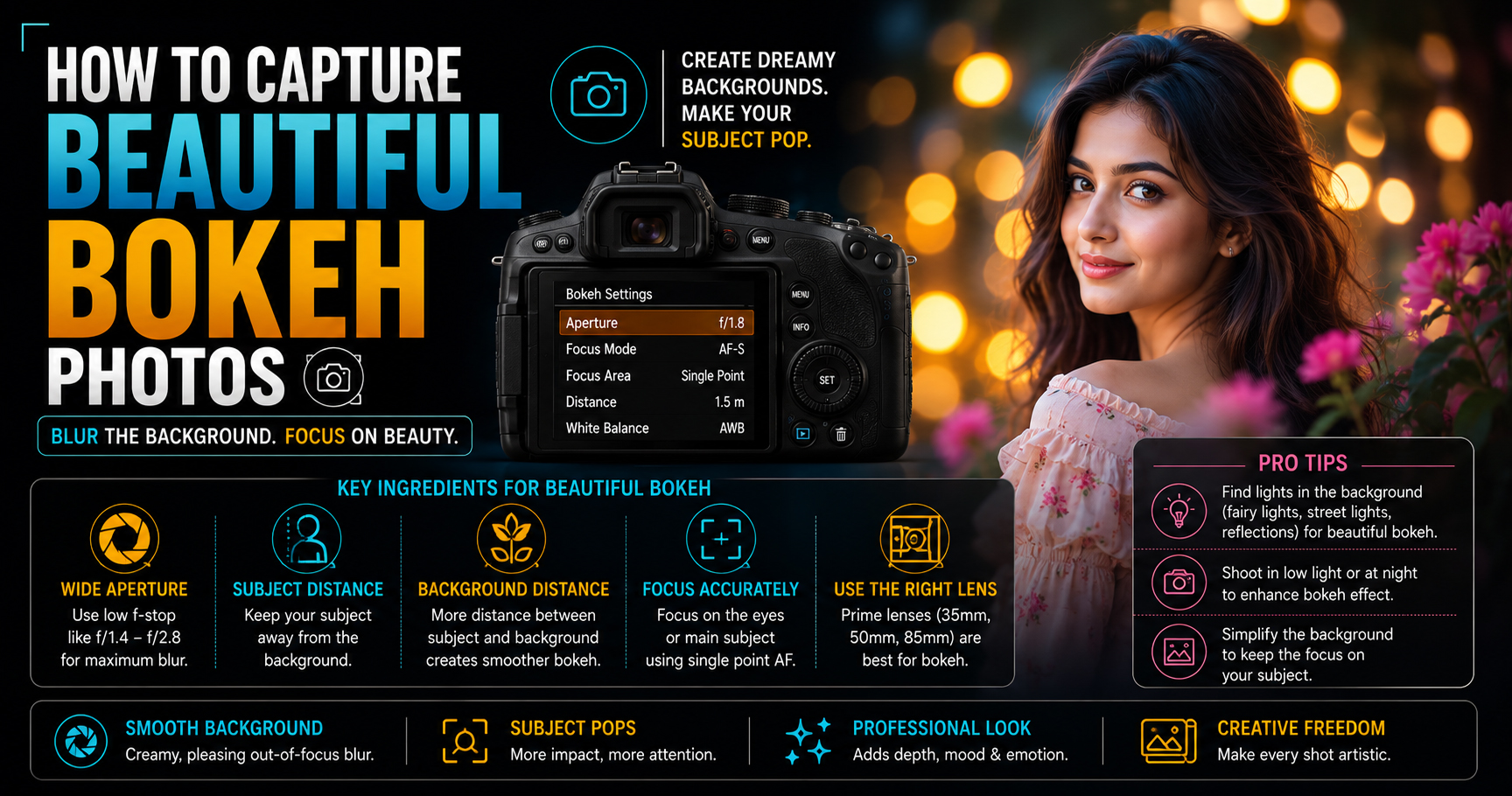
1. Use a Wide Aperture
A wide aperture creates a shallow Depth of Field, making the background blur more strongly.
Recommended apertures:
- f/1.2
- f/1.4
- f/1.8
- f/2
- f/2.8
The smaller the f-number, the greater the potential for background blur.
2. Use the Right Lens
The lens plays a much bigger role in creating bokeh than the camera body.
Best Lenses for Beautiful Bokeh
- 50mm f/1.8
- 35mm f/1.8
- 85mm f/1.8
- 105mm f/2.8 Macro
- 70–200mm f/2.8
Prime lenses often produce smoother and more attractive bokeh than standard kit lenses.
3. Keep Your Subject Away from the Background
The farther your subject is from the background, the blurrier the background becomes.
Example:
- Subject standing against a wall → Less blur
- Subject standing several meters away from the background → More blur
This is one of the easiest ways to improve bokeh.
4. Move Closer to Your Subject
Getting closer to your subject increases background blur.
Portrait photographers often fill the frame with the subject rather than shooting from far away.
5. Choose the Right Background
Bokeh looks especially beautiful when the background contains small light sources or detailed patterns.
Great backgrounds include:
- Fairy lights
- City lights
- Christmas decorations
- Street lights
- Sunlight through leaves
- Reflections on water
These points of light become attractive blurred circles when out of focus.
Best Camera Settings for Bokeh Photography
Shooting Mode
- Aperture Priority (A/Av)
- Manual Mode (M)
Aperture
- f/1.4–f/2.8
ISO
- ISO 100–400 in daylight
- Increase ISO only when necessary in low light
Shutter Speed
Use a shutter speed fast enough to keep the subject sharp.
Examples:
- Portraits: 1/200 sec or faster
- Children: 1/500 sec or faster
- Pets: 1/800 sec or faster
Focus Mode
Use:
- Single Point Autofocus
- Eye Detection AF (if available)
Accurate focus on the eyes is essential for portrait photography.
Learn Bokeh Photography Through Practical Training
Reading about bokeh is helpful, but creating beautiful background blur becomes much easier when you practice with professional guidance.
At Sharanya Institute Of Photography, led by Shrinivas Javanjal, students learn portrait photography, lighting, lens selection, composition, camera settings, and bokeh techniques through real-world assignments, outdoor shoots, and studio sessions.
Our Online and Offline Diploma in Photography & Wedding Cinematography Courses are designed for beginners and aspiring professionals who want to build careers in photography, cinematography, and editing. Through hands-on training, you’ll learn how to confidently create stunning bokeh effects and professional-quality images.
Best Camera Types for Bokeh
Excellent options include:
Full Frame Cameras
Advantages:
- Strong background blur
- Better low-light performance
- Professional image quality
APS-C Cameras
Advantages:
- Affordable
- Lightweight
- Excellent image quality
With a fast lens, APS-C cameras can also produce impressive bokeh.
Mirrorless Cameras
Modern mirrorless cameras offer:
- Eye Detection Autofocus
- Fast focusing
- Excellent portrait performance
- Great video capabilities
Bokeh Photography Ideas
Try practicing with:
- Portrait Photography
- Wedding Photography
- Street Photography
- Flower Photography
- Macro Photography
- Food Photography
- Pet Photography
- Product Photography
Each genre benefits from beautiful background separation.
Common Beginner Mistakes
Avoid these common errors:
- Using a small aperture like f/11.
- Standing too far from the subject.
- Placing the subject too close to the background.
- Using a wide-angle lens for portraits.
- Focusing on the wrong part of the subject.
- Using cluttered backgrounds.
Correcting these mistakes can dramatically improve your results.
Professional Tips for Better Bokeh
- Shoot during Golden Hour for soft natural light.
- Use fast prime lenses whenever possible.
- Look for backgrounds with small light sources.
- Position your subject several meters away from the background.
- Focus precisely on the eyes.
- Shoot in RAW for maximum editing flexibility.
- Experiment with different distances and focal lengths.
Bokeh vs Background Blur
Many beginners think they are the same.
Background Blur
Simply means the background is out of focus.
Bokeh
Describes the quality and appearance of that blur.
A lens can produce background blur without producing particularly attractive bokeh.
Frequently Asked Questions (FAQs)
What is bokeh in photography?
Bokeh is the aesthetic quality of the out-of-focus areas in an image, creating a smooth and pleasing background blur.
Which lens is best for bokeh?
Popular choices include the 50mm f/1.8, 85mm f/1.8, and 70–200mm f/2.8 because they create beautiful background separation.
Can beginners create bokeh?
Yes. With a wide aperture, proper subject placement, and the right shooting technique, beginners can achieve professional-looking bokeh.
Does sensor size affect bokeh?
Yes. Larger sensors generally make it easier to create stronger background blur, but excellent bokeh is also possible with APS-C cameras when paired with a fast lens.
Should I shoot RAW for bokeh photography?
Yes. RAW files provide greater flexibility for adjusting exposure, colors, and sharpness during editing.
Final Thoughts
Beautiful bokeh is more than just a blurred background—it’s a creative tool that helps direct attention, add depth, and give your photos a polished, professional look. By choosing the right lens, using a wide aperture, positioning your subject carefully, and practicing your technique, you’ll be able to create stunning images that stand out.
Remember, expensive equipment isn’t the only path to great bokeh. Understanding light, composition, and camera settings is far more important than owning the latest camera body.
If you’re serious about becoming a professional photographer, cinematographer, or editor, Sharanya Institute Of Photography offers Online and Offline Diploma in Photography & Wedding Cinematography Courses under the expert mentorship of Shrinivas Javanjal. With practical portrait sessions, outdoor shoots, studio lighting, editing classes, and live projects, you’ll gain the skills needed to create beautiful bokeh and professional-quality photographs.
Tags:
You May Also Like
-
Jul 24, 2026
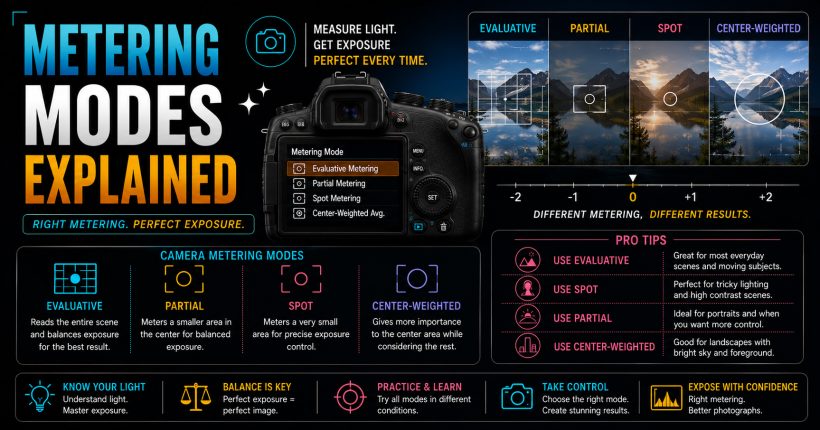
Learn camera metering modes, exposure measurement, and professional techniques to capture perfectly exposed photographs in every lighting condition with confidence.
-
Jul 24, 2026
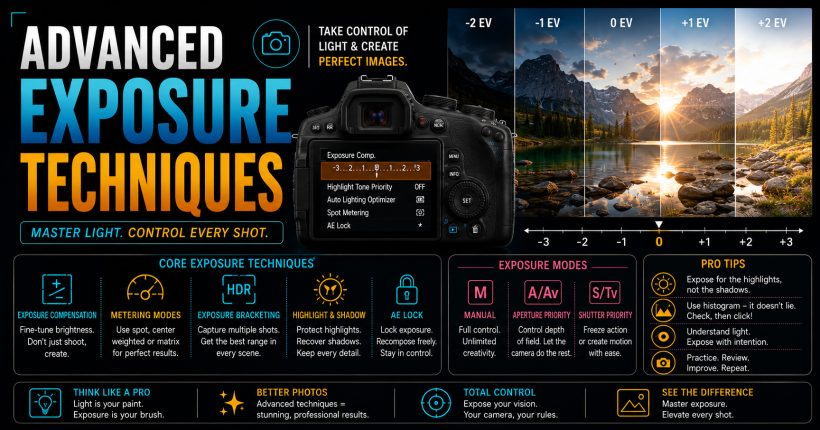
Master advanced exposure techniques using histograms, metering, exposure compensation, and bracketing to capture perfectly exposed professional-quality photographs every time.
-
Jul 24, 2026
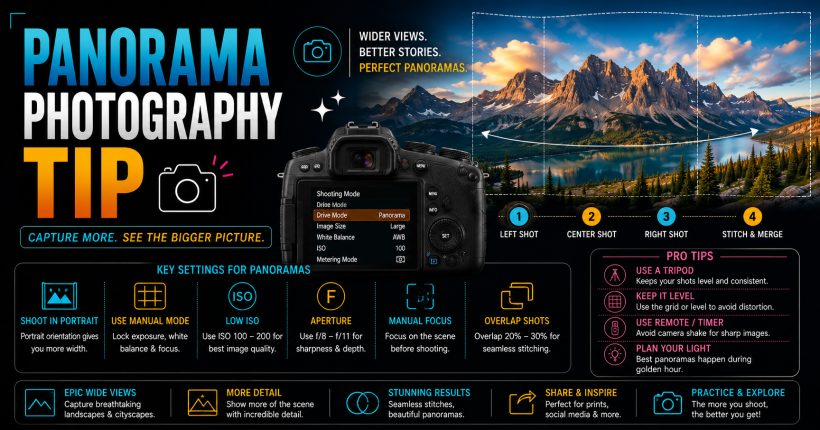
Learn panorama photography with simple camera settings, stitching techniques, and professional tips to capture breathtaking wide-angle landscapes and cityscapes effortlessly.
-
Jul 24, 2026
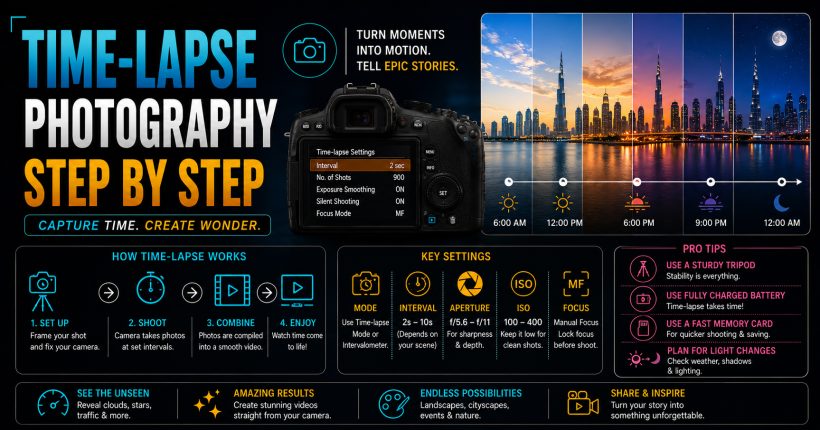
Learn time-lapse photography with simple camera settings, interval techniques, editing workflow, and expert tips for creating stunning cinematic videos effortlessly.
Sign up to receive our latest updates
Get in touch
Call us directly?
+91 9769533675
Address
Office No 9, First floor, Sudama Tower, Kasturi Plaza, Dombivli (E)
support@photovideocourse.com
Popular Courses

- © 2026 Sharanya Institute Of Photography All rights reserved.